High Stakes Evolution: UK Casinos Ride New Waves of Change
Sofia Roth · Apr 5, 2026

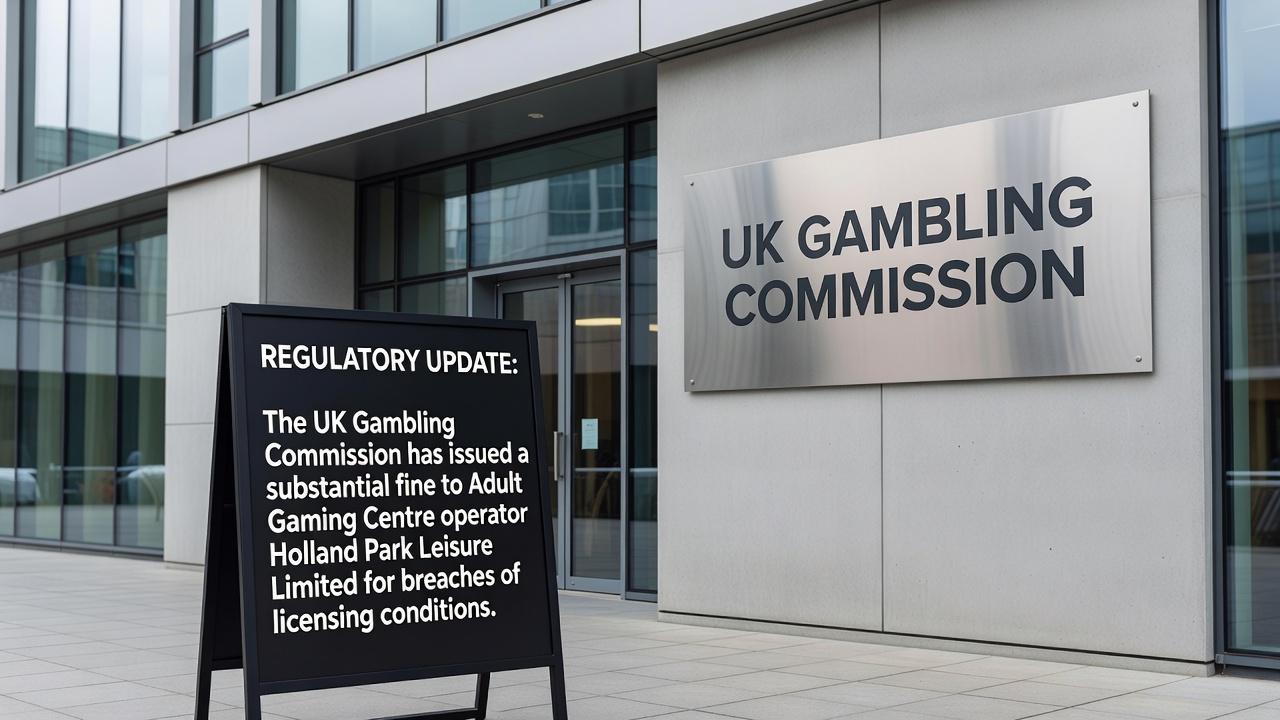
UK Gambling Commission Reaches Settlement with Octopus Game Limited Over Key Compliance Failures
Octopus Game Limited, operating under the trading name Octopus Game with remote operating licence number 000-062545-R-337248-006, faced a licence review from the UK Gambling Commission; this action kicked off under section 116 of the Gambling Act 2005 after a compliance assessment in November 2024 uncovered specific breaches, prompting a settlement that avoided a full financial penalty while enforcing corrective measures.
What's interesting here is how the review zeroed in on two critical areas—anti-money laundering and counter-terrorism financing controls, along with remote customer interaction requirements—breaches that experts in gambling regulation have long flagged as foundational to operator accountability; data from the Commission's public register details Licence Condition 12.1.1 paragraphs 1 and 2 violations for the former, and Social Responsibility Code Provision 3.4.3 paragraphs 1, 2, 3, 5, 8, 9, 11, 12, and 13 for the latter, underscoring the depth of the scrutiny applied during that November assessment.
The Trigger: November 2024 Compliance Assessment
Assessors from the UK Gambling Commission descended on Octopus Game Limited's operations in November 2024, conducting a targeted review that exposed gaps in essential safeguards; those who've studied these processes know such assessments often involve deep dives into transaction records, customer verification protocols, and interaction logs, revealing whether operators uphold the Licence Conditions and Codes of Practice (LCCP) as mandated.
And while the full mechanics of the assessment remain detailed in the Commission's records, the outcome painted a clear picture—failures in anti-money laundering (AML) and counter-terrorism financing (CTF) controls under LC 12.1.1(1) and (2), which require operators to maintain robust policies, procedures, and controls to prevent money laundering and terrorist financing, including risk assessments and ongoing monitoring; breaches here meant Octopus Game hadn't fully implemented these, potentially leaving vulnerabilities that regulators aim to seal tight.
But here's the thing: the review didn't stop there, extending to remote customer interaction under Social Responsibility Code Provision 3.4.3, a multi-paragraph code that demands operators identify and act on harm indicators through personalized communications, session monitoring, reality checks, and deposit limits—specifically, paragraphs 1 through 3 cover identifying interactions needing review, while 5, 8, 9, 11, 12, and 13 outline required actions like warnings, behavioral reviews, and enhanced measures for at-risk players; Octopus Game's lapses across these points highlighted systemic shortfalls in protecting remote gamblers.
Unpacking the Breaches: AML/CTF and Customer Interaction Details
Take Licence Condition 12.1.1, for instance; paragraph 1 mandates that holders of operating licences establish and maintain one or more systems of internal controls and procedures designed to prevent money laundering and terrorist financing, while paragraph 2 requires these to reflect the size and nature of the business—Octopus Game's failures indicated inadequate systems, perhaps in customer due diligence or suspicious activity reporting, areas where figures from Commission reports show persistent challenges across the remote gambling sector.
Shifting to SRCP 3.4.3, this provision forms the backbone of remote safer gambling efforts; paragraph 1 requires reviewing customer interactions for SRCP 3.4.2 compliance (session lengths, spend patterns), paragraph 2 sets prioritization based on risk, and paragraph 3 demands sufficient numbers of trained staff—yet Octopus Game fell short; further, paragraph 5 calls for tailored communications post-risk identification, 8 for maximum session time warnings, 9 for deposit/spend notifications, 11 for behavioral checks on multiple accounts, 12 for maximum check frequencies, and 13 for enhanced interactions like telephoning high-risk players, breaches that collectively signal missed opportunities to intervene in potential harm scenarios.
Observers note these aren't isolated slips; the Gambling Commission's enforcement data reveals a pattern where remote operators grapple with scaling these requirements amid high-volume online play, but for Octopus Game, the November 2024 assessment laid bare the specifics, triggering the section 116 review process—a mechanism allowing regulators to investigate licence suitability when compliance falters.
The Section 116 Review Process and Its Outcomes
Under section 116 of the Gambling Act 2005, the Commission launches reviews when evidence suggests a licensee may no longer hold a licence fittingly; for Octopus Game, this unfolded post-assessment, involving notifications to the operator, opportunities for representations, and ultimately a negotiated settlement rather than revocation or outright penalty— a pragmatic path that resolved matters without halting operations entirely.
So, the agreement reached includes Octopus Game paying £26,000 in lieu of a financial penalty, covering the Commission's costs (an amount not publicly specified but standard in such cases), and issuing a public statement acknowledging the breaches; this statement, mandated as part of the deal, serves as a transparency tool, detailing the failings and commitments to remediation, much like those in prior Commission settlements where operators outline enhanced training, tech upgrades, or policy overhauls.
Turns out, such settlements have become a Commission staple; data indicates they've handled dozens annually, balancing enforcement with industry continuity, especially as broader reforms loom—though for this case, the focus stays squarely on Octopus Game's corrective path forward, with the licence intact but under watchful eyes.
Implications for Octopus Game and Remote Gambling Operators
People in the sector often discover that post-settlement, operators like Octopus Game ramp up compliance efforts; this might involve hiring more AML specialists, deploying advanced monitoring software for customer interactions, or conducting internal audits to align with LC 12.1.1 and SRCP 3.4.3—measures that, according to Commission guidance, must be proportionate yet effective, preventing recurrence.
Yet the £26,000 payment underscores the financial sting without the escalation of a full fine, which can run into millions for graver cases; covering costs adds another layer, ensuring the regulator's resources remain protected, while the public statement (accessible via the Commission's register) puts the operator's accountability on display for players and peers alike.
One case that mirrors this involved another remote operator earlier in 2024, where similar AML lapses led to a comparable deal—though specifics differ, the template holds: identify, review, settle, improve; for Octopus Game, trading as Octopus Game, the ball's now in their court to demonstrate sustained compliance, particularly as remote licensing demands evolve with tech and player behaviors.
Broader Context Within UK Gambling Regulation
And while this story centers on one operator, it reflects the Commission's rigorous stance on core protections; AML/CTF controls stem from international standards like those from the Financial Action Task Force, adapted via the UK's Money Laundering Regulations, ensuring gambling doesn't become a conduit for illicit funds—breaches here risk not just fines but reputational hits that deter partnerships or players.
Customer interaction rules, meanwhile, tie into the push for safer gambling, with SRCP 3.4.3(13) even requiring calls to vulnerable customers; experts who've parsed Commission stats find these provisions correlate with reduced harm incidents when properly executed, making Octopus Game's multi-paragraph failures noteworthy because they spanned identification through action.
Now, as the industry eyes 2026 timelines for LCCP updates—though not directly tied here—these cases highlight where the rubber meets the road: enforcement today shapes tomorrow's standards, with operators like Octopus Game serving as real-world examples of accountability in action.
Conclusion
The settlement with Octopus Game Limited wraps a pivotal chapter sparked by the November 2024 assessment, addressing AML/CTF and customer interaction breaches through a £26,000 payment, cost coverage, and public statement; this outcome reinforces the UK Gambling Commission's commitment to robust oversight, ensuring remote operators prioritize player safety and financial integrity under the Gambling Act.
Those tracking the sector will watch how Octopus Game implements fixes, potentially setting a benchmark for peers navigating similar compliance landscapes; in the end, such reviews don't just penalize—they propel the industry toward stronger safeguards, one case at a time.